
Amazon farmers discovered the secret of domesticating wild rice 4,000 years ago

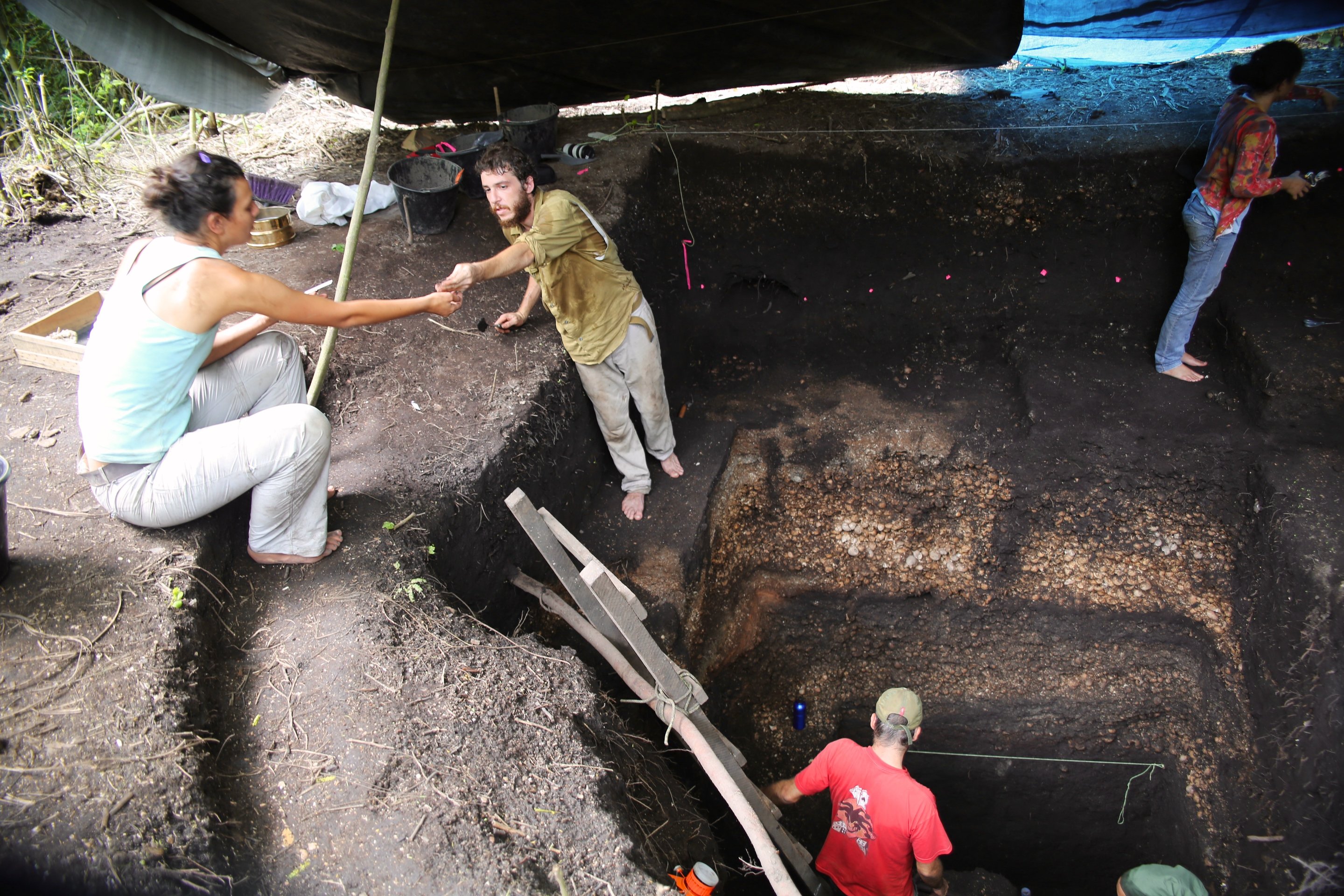
Amazonian farmers discovered how to manipulate wild rice so the plants could provide more food 4,000 years ago, long before Europeans colonised America, archaeologists have discovered.
Experts from the UK and Brazil have found the first evidence that ancient South Americans learned how to grow bigger rice crops with larger grains, but this expertise may have been lost after 1492 when the indigenous population was decimated, research shows.
The evidence of the success of early rice farmers on the vast wetlands near the Guaporé River in Rondônia state, Brazil, could help modern day plant breeders develop rice crops which are less susceptible to disease and more adaptable to the effects of climate change than the Asian varieties. Different species of rice were first grown approximately 11,000 years ago in the Yangtze River, China, and around 2,000 years ago in West Africa.
The University of Exeter study, funded in part by the European Research Council, also shows how important the huge wetlands and tropical forests of lowland South America were in providing food for early human settlers in South America. Ancient inhabitants managed to domesticate cassava, peanuts and chilli peppers crops for food.
The archaeologists analysed 16 samples of microscopic plant remains from ten different time periods found during excavations during 2014 led by the University of São Paulo in South West Amazonia. More phytoliths, hard, microscopic pieces of silica made by plant cells, were found at higher ground level, suggesting rice began to play a larger role in the diet of people who lived in the area -- and more was farmed -- as time went on.
Changes in the ratio of husk, leaf and stem remains found at different ground levels also suggest the Amazon residents became more efficient harvesters over time, bringing more grain and fewer leaves to the site. The rice grown, Oryza sp, also became bigger over time compared to the wild rice first cultivated by the South Americans. This area has been occupied by humans for at least 10,000 years.
Professor Jose Iriarte, from the University of Exeter, who led the research, said: "This is the first study to identify when wild rice first began to be grown for food in South America. We have found people were growing crops with larger and larger seeds. Even though they were also eating wild and domesticated plants including maize, palm fruits, soursop and squash, wild rice was an important food, and people began to grow it at lake or river edges.
"During a time when the climate was getting wetter and the wetlands expanding, this critical seasonal resource that is ripe at the peak of the flooding season when other resources are dispersed and scarce, residents of Monte Castelo began to grow larger rice"
Evidence for mid-Holocene rice domestication in the Americas by Lautaro Hilbert and Jose Iriarte from the University of Exeter, Elizabeth Veasey, Carlos Augusto Zimpel, Eduardo Goes Neves and Francisco Pugliese from the Universidade de São Paulo, Bronwen S. Whitney from Northumbria University and Myrtle Shock from the Universidade Federal do Oeste de Pará, is published in the journal Nature Ecology and Evolution.
Story Source:
Materials provided by University of Exeter. Note: Content may be edited for style and length.
Journal Reference:
- Lautaro Hilbert, Eduardo Góes Neves, Francisco Pugliese, Bronwen S. Whitney, Myrtle Shock, Elizabeth Veasey, Carlos Augusto Zimpel, José Iriarte. Evidence for mid-Holocene rice domestication in the Americas. Nature Ecology & Evolution, 2017; DOI: 10.1038/s41559-017-0322-4

Crops evolving ten millennia before experts thought
Professor Robin Allaby, in Warwick's School of Life Sciences, has discovered that human crop gathering was so extensive, as long ago as the last Ice Age, that it started to have an effect on the evolution of rice, wheat and barley -- triggering the process which turned these plants from wild to domesticated.
In Tell Qaramel, an area of modern day northern Syria, the research demonstrates evidence of einkorn being affected up to thirty thousand years ago, and rice has been shown to be affected more than thirteen thousand years ago in South, East and South-East Asia.
Furthermore, emmer wheat is proved to have been affected twenty-five thousand years ago in the Southern Levant -- and barley in the same geographical region over twenty-one thousand years ago.
The researchers traced the timeline of crop evolution in these areas by analysing the evolving gene frequencies of archaeologically uncovered plant remains.
Wild plants contain a gene which enables them to spread or shatter their seeds widely. When a plant begins to be gathered on a large scale, human activity alters its evolution, changing this gene and causing the plant to retain its seeds instead of spreading them -- thus adapting it to the human environment, and eventually agriculture.
Professor Allaby and his colleagues made calculations from archaeobotanical remains of crops mentioned above that contained 'non-shattering' genes -- the genes which caused them to retain their seeds -- and found that human gathering had already started to alter their evolution millennia before previously accepted dates.
The study shows that crop plants adapted to domestication exponentially around eight thousand years ago, with the emergence of sickle farming technology, but also that selection changed over time. It pinpoints the origins of the selective pressures leading to crop domestication much earlier, and in geological eras considered inhospitable to farming.
Demonstrating that crops were being gathered to the extent of being pushed towards domestication up to thirty thousand years ago proves the existence of dense populations of people at this time.
Professor Robin Allaby commented, "This study changes the nature of the debate about the origins of agriculture, showing that very long term natural processes seem to lead to domestication -- putting us on a par with the natural world, where we have species like ants that have domesticated fungi, for instance."
Story Source:
Materials provided by University of Warwick. Note: Content may be edited for style and length.
Journal Reference:
- Robin G. Allaby, Chris Stevens, Leilani Lucas, Osamu Maeda, Dorian Q. Fuller. Geographic mosaics and changing rates of cereal domestication. Philosophical Transactions of the Royal Society B, October 2017 DOI:10.1098/rstb.2016.0429

Managing Risk in Agriculture

In an ever changing environment, farmers are making risky decisions every day. A lot of the times the consequences of those decisions are unknown and the outcomes could be good or bad. Flexibility of prices and yields are major sources of risk in agriculture. Other contributors to the risky environment for farmers can be changes in technology, legal and social concerns.
Typically, farmers and other businesses try to avoid risky situations unless there is a strong probability of making money. However, where there are higher profits there are usually higher risks. In an article by George F. Patrick of Purdue University he discusses ways to help farmers develop their own integrated risk management strategies.
Patrick advises that you set farm family goals and consider risk attitude and types of individuals, risk bearing ability, and the formulation of expectations.
Setting goals requires some time and thought. Most people have family, business, and personal goals. Our goals are not independent of other people and their goals and they are a major part of our guidance system. Individuals may have unrealistic goals which, if not revised, may be a source of frustration and stress.
There has been argument on what is the definition of the word risk. Some dictionaries say risk is the possibility of injury, damage or loss. Economists argue it means uncertainty. They decided that the lack of knowledge about the future is what’s important in both risk and uncertainty. Jerry Robinson, Jr., professor of sociology and rural sociology at the University of Illinois, lists individuals in the following risk-taking categories: avoiders, daredevils, adventurers, and calculators.
Avoiders are the most cautious risk takers but they do take some risks. They expect the worst to happen. They lose because they miss out on economic opportunities to profit. Farmers who are avoiders may not be forced out of business, but they manage to survive. Daredevils are the opposite of avoiders and take many unnecessary chances. They are the plungers who close their eyes to risk, ignore facts, and go with it. They also fail because they refuse to take precautions. They don’t get involved in farming. Adventurers enjoy risks. Risks are challenging and exciting to the adventurer. They look to take risks. Many farmers are adventurers with respect to their marketing plans. Finally, are the Calculators; they take chances to get ahead, but recognize that there are degrees of risk. Before taking that risk the calculators gather and analyze all of the information and analyze the odds.
Risk management strategies are affected by someone’s ability to bear or take risks. Risk bearing ability is related to the solvency and liquidity of one’s financial position. To show the differences in risk bearing ability, Table 1 below shows three farmers’ balance sheets and cash flow statements for operating 400 acres with the same type of machinery. From a cash flow and financial position of the business standpoint, Oscar is able to assume more risk than either Sam or Bob. Sam requires less cash annually than Bob and has a larger cash flow cushion, Bob does have a larger net worth based on which to fall back. For example, a 16.7 percent or $20,000 reduction in gross farm income ($10,000 in the case of Sam) results in a cash flow shortfall of $6,000 for Sam and $12,000 for Bob. However, the $6,000 cash flow shortfall represents 12 percent of Sam's net worth, but the $12,000 shortfall is only 8 percent of Bob's net worth of $150,000.
Formulating expectations about the future is also a factor in decision making. For example, expected prices for corn and soybeans have some impact on farmers’ planting decisions. How individuals form their expectations is unknown. Formulating expectations is an important phase of the decision making process, and it involves judgement. Most farmers rely on personal experience but also use other information to make their decisions.
As you can see there are many different ways to look at and go about tackling risk in agriculture. You have to know who you’re dealing with and
what you’re dealing with and whether or not you want to take that risk