Agriculture In Iran
The year 99 has shown a 22 % increase in exportation of ‘summer vegetables’.

Deputy director of Forage and Weaving agricultural department, Hossain Asghari, has announced a 2.5% increase in production of summer vegetables in the year 1999 and also a 22% increase in exportation of this product compare to the previous year, 1998.
Mr. Hossain Asghari, in his interview, begins by asserting, in the year 1999 production of ‘summer vegetables’ (group of vegetables which are naturally developed during warm seasons i.e. summer) has shown an increase of 2.5% compared to the previous year, 1998
He further added, the increase in the production of this particular product is as follows, 27 million and 121 thousand tons to 28 million and 848 thousand tons in the year 1997-98 and 1998-97 respectively. In regard to this successful increase in production, Mr. Hossain Asghari elucidates, despite the Covid-19 pandemic which has caused a global disruption, particularly in exportation and production, in Iran, there has been an increase of 2.5% and 22% accordingly.
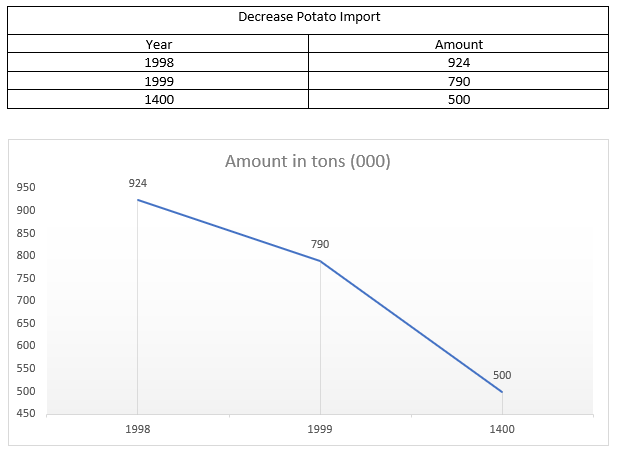
Further on the topic of summer vegetable growth and their import and export procedure, Mr. Hossain Asghari added, in regards to importing potato, there has been a sharp decrease of 46% in the year 1999, in actual number, this translate to, 924 tons in the year 1998 to 790 tons in 1999 and forecasted in the current year 1400, this number will decrease to 500 tons. This is a particular incentive amoungs farmers, particularly, potato farms, as it means they will see an increase in demand and sale of their product in the forthcoming years.
For clarity, the graphical representation of these numbers are as follows:
Table One : Summer vegerables production in Iran from 1997 to 1999
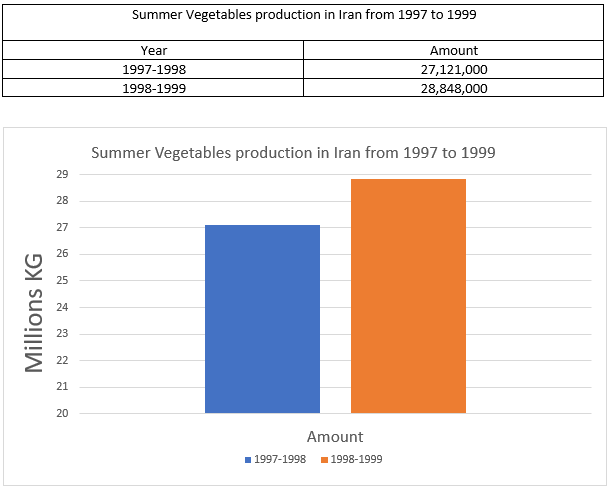
Table Two: Decrease in potato Import

Implementation of 37 new ‘Nursery Sapling Gardens’ within the following year
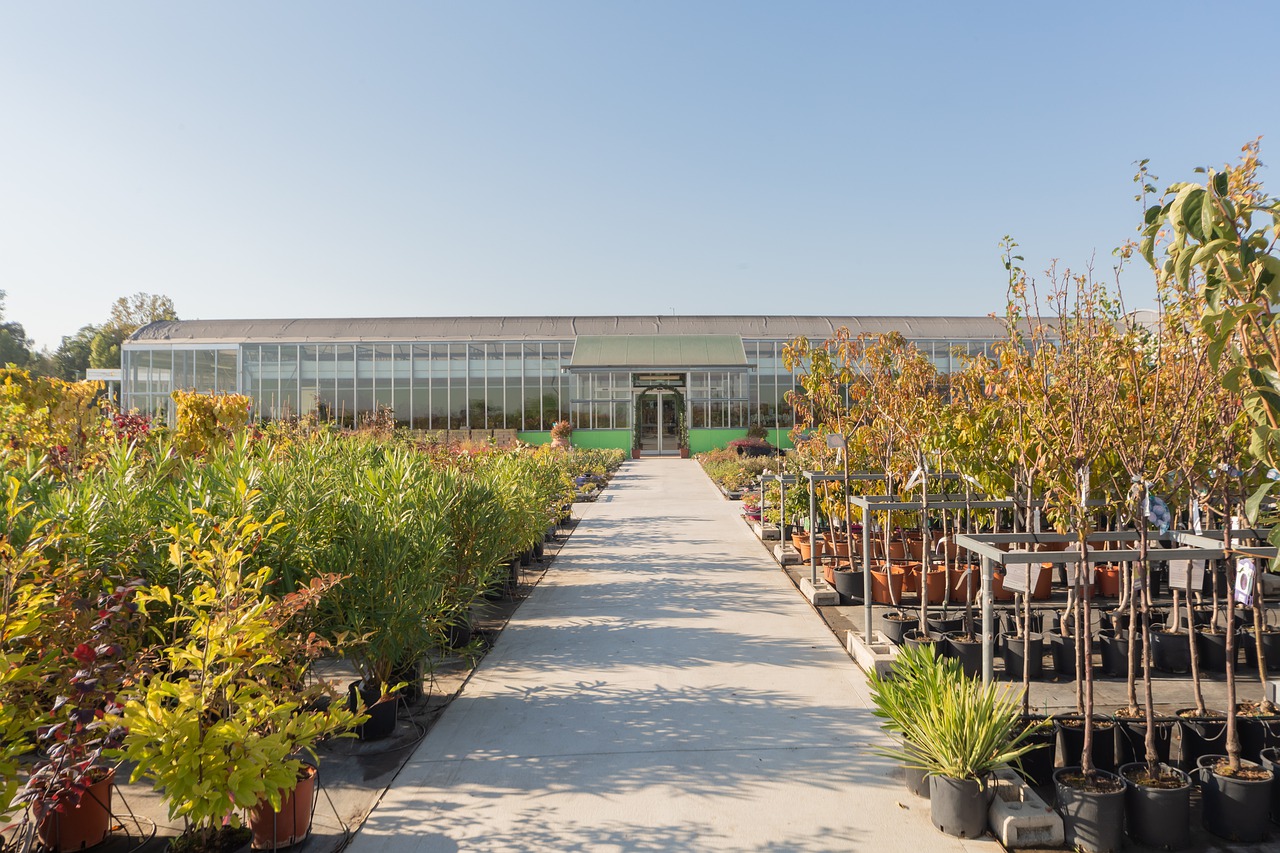
The deputy director of the horticulture department, Mr. Morteza Mosavi, has announced, within the following year, 37 new Major Sapling Gardens are going to be constructed and added, these gardens enable to develop intact and robust saplings which can be employed for a variety of purpose, particularly, greening urban infrastructure.
According to Mr. Morteza Mosavi, currently there are 5 ‘Nursery Sapling Gardens’ across the country in which over 2 million saplings have been nurtured so far. He added, with the implementation of 37 new plant nurseries, the number of saplings will rise to 12 million and each sapling will be given a Blue ID which means they are free from any harmful materials as pests, and etc…
He furthers added, within the following decade, these plant nurseries will be able to produce over 45 million intact and robust saplings with a Blue ID in which they can meet the entire need of the country for such horticultural products.
In regard to non-governmental nursery sapling gardens i.e. professional privately owned gardens, Mr. Morteza Mosavi explained, in total over 67 million saplings have been produced in these gardens, however, this is crucial that these saplings do not contain any harmful materials. By doing so, he has encouraged the individuals to seek Blue ID standards for their products so they can be distributed with the preapproval of professional bodies.
Domestic greenery gardens (nursery sapling gardens) and their contribution to the urban green infrastructure
Current human beings' needs for urbanization is ultimately meant lack of green environments in the place where we live. It is believed individuals have a profound need to be connected with nature, regardless of their simultaneous desire for urbanization. Despite the humans’ phycological needs, a green environment can have significant healthily benefits, particularly cleaning the polluted atmosphere; an issue the majority of the urban areas are now facing.
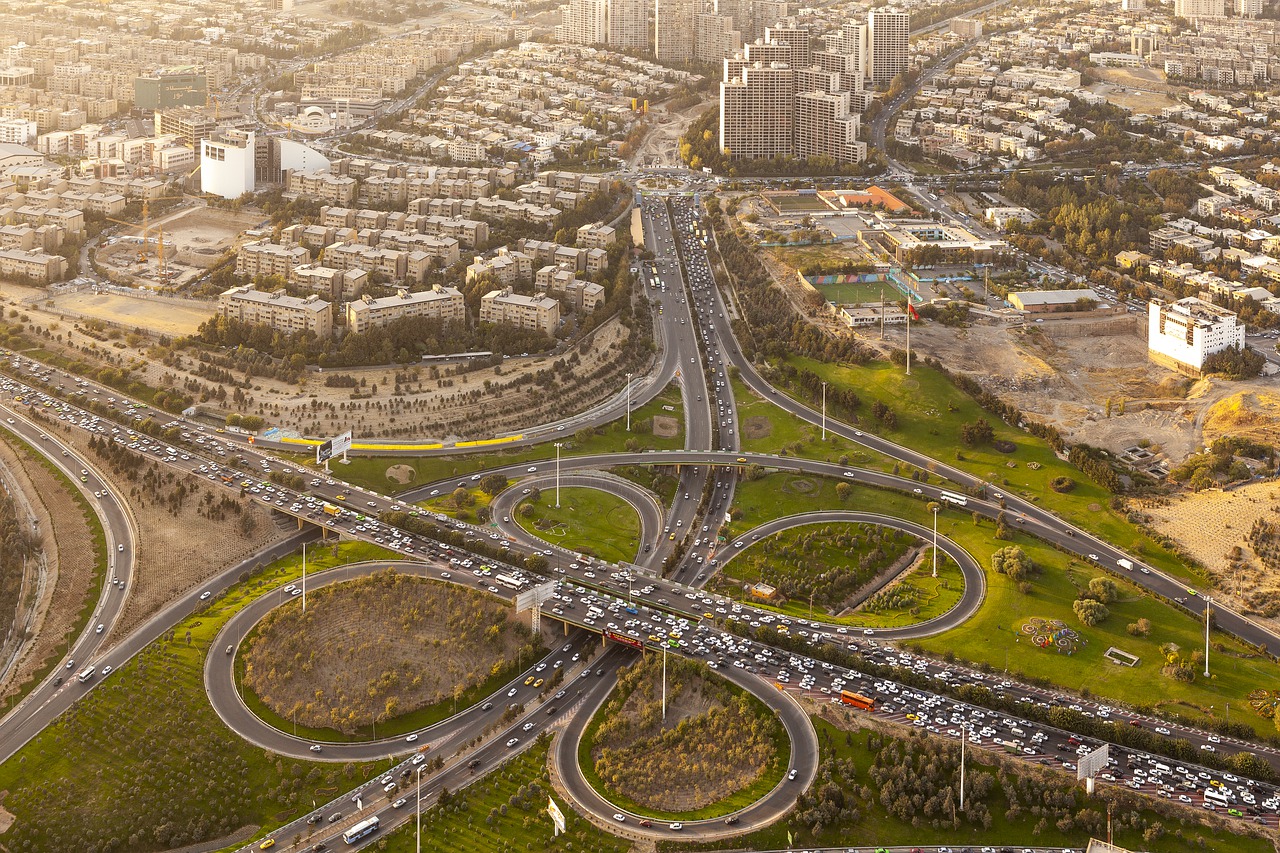
That being said, the abovementioned incentive means we will have a greener environment in places we choose to live and can therefore benefit significantly from both physical and phycological consequences of it.


Agriculture In Iran
Iran produces and exports 70% of the world's demand for Damask Rose (Gole Mohammadi) and this year alone, they have produced over 60 thousand tons of this flower.
According to Hossein Zeynali, director of Medical Plantation in Iran, this year's production of Damask Rose has reached an astonishing amount of 60 thousand tons. He added, an exceptional amount of Damask Rose has been produced this year and the harvesting process will take place on 05/05/2021 (15/02/1400) in Sistan-Baluchistan and continues to successfully cease on 06/07/2021 (15/04/1400) in Kashan.
Mr. Zeynali explained, this product is estimated to be distributed at a price of 20 to 25 thousand tomans per kilo ($7 to $8 US dollar per kilo) and believed within the internal market there will be no shortcomings of purchases of this product. He further added, this year harvested amount of Damask Rose is going to be processed as 2.5 tons of flower essence, 302 tons of dried flower and approximately, 3 million litter of rose water in which 30% of these processed products are going to be exported across the globe, mainly in Europe and Asia, worth over $8 million.
Mr. Zeynali elucidates, Iran’s successful Damask Rose plantation and harvestation, particularly this year's production, is as the direct result of farmers’ supervision over their farmland and/or medium-large size gardens. He added, the independent agricultural research departments in Iran, have and may continue, assisting the agriculture sector to further develop agriculture in Iran.
What are the contemporary use of Damask Rose (Gole Mohammadi)?
Damask Rose (i.e. Gole Mohammadi) as well as decor and cooking purposes, is believed to have a profound medical cosmetic benefit. It is proven Damask roses contain a large amount of antimicrobial and anti-ageing compounds which renders them a highly effective remedy to keep human skin young and prevent or cease premature ageing.

Damask Rose oil proceed by cooking a very large amount of flower at once which produce a small, highly viscous oil that a small amount can proactivity show visible signs.

Agriculture In Iran
There has been an increase of 50% in distribution of tractors thanks to support of the government, Agricultural bank (Bank Keshavarzi), and the Tractor manufacturer (ITMCO), an increase enthusiastically welcomed by the farmers.
Iran's Agricultural research and development department have announced in the year 2020 (1399) 27,000 new Tractor has been distributed amongst farmland owners, which shows a 50% increase compared to the previous year.
Kambiz Abbasi, deputy director of the agricultural research and development department, stated, with the support of the government, Agricultural bank (Bank Keshavarzi), and the Tractor manufacturer (ITMCO) we were able to break the previous year distribution record and produce over 27,000 new tractors which are now available to the farmers.
Mr. Kambiz Abbasi explained due to changes in Iran's policonomics circumstances, the majority of the farmers are now demanding independent ownerships of tractor.
Regarding the fair and partial distribution of these mechanical goods, Mr. Kambiz Abbasi asserted, the process of tractor assignment is a comprehensive procedure where the local supervisory sectors are responsible for registering the applicant farmers. Subsequently, the applicant requests are closely examined to determine their eligibility for the assignment of the tractors.
He added, the applicants' request depends on a number of factors as:
1) Ownership and area of the land,
2) Type of the farmland (Rainfed or irrigated lands),
3) And previous record/s of tractor purchase or ownership

Lastly, due to some farmers might take advantage of the incentive and attempt to redistribute or sell the tractor, their previous record/s of tractor purchase is closely examined for any irregularity. Furthermore, any reassignment of the tractors are ought to take place within one of the Agricultural bank (Bank Keshavarzi) branches and if any contortion is noticed in the agrrement, reassignment will be denied and the involved parties can be penalitised.

Agriculture In Iran
Iran’s agricultural department ( Ministry of Agriculture - Jihad ) is formulating a large-scale strategy to combat the swarms of desert locusts’ attack
This swarm of desert locusts is traveling to Iran from the Arabian countries for the third year in a row. These massive swarms of desert locusts’ attacks are considered to be highly damaging to the farmlands’ food productions and could potentially destroy a large amount of food if remain unchallenged.
Within the southern part of Iran, where the swarms of desert locusts have already hit, there are currently 7 provinces combating the pests attack, and It is believed that this number could increase to 13 out of Iran’s 32 provinces. It is estimated that the affected areas are going to be over 600,000 hectares (1.5 million acres) of farmland and the operation formulated to tackle this problem is expected to last until September. The affected farmlands are located in Hormozgan, Sistan-Baluchistan, Khuzestan, Fars, Bushehr, and Kerman.
Saeed Moein, the director of Iran’s Plant Protection Organization (PPO) has asserted, they have already allocated a budget of 150 billion rials ($3.6m) to the local farm-owners and Plant Protection supervisor to fight the affected areas and added there has been a further request 1 trillion rials ($24m) from the government which is expected to be approved in April.
What is Desert locust and how do they behave?
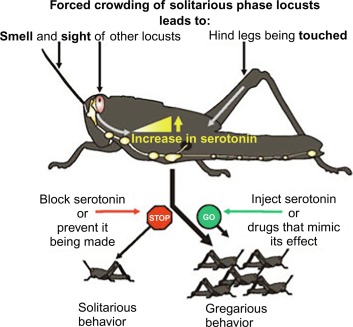
Desert locust is a mutation of the Grasshoppers Insect family. They are mainly found in Africa, Arabia, and West Asia. Desert locust tends to alter their habitation according to their environmental changes and therefore are known as two distinctive types: tranquil or excitable.
Tranquil types, as the name suggests, are forms in a solitary, shorter-winged, highly fecund, and non-migratory group and exist unnoticed, excitable, on the other hand, form into a gregarious, long-winged, and migratory group which they may travel long distances into new areas for the search of food and therefore attack farmlands – the area of food production prepared by humans for humans use.
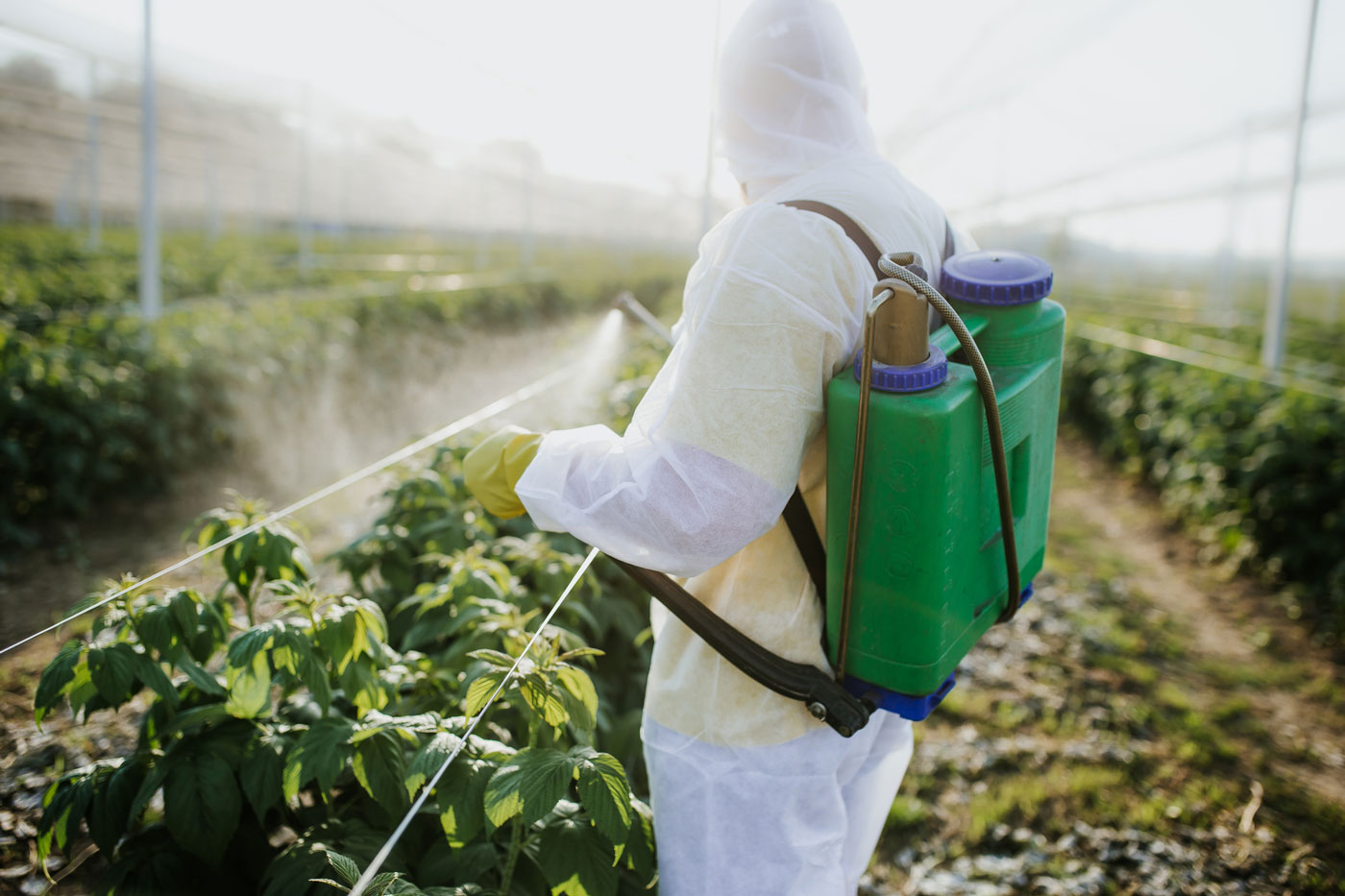
So far, the best strategy to mitigate the destructive impact of this pests attack is Crop spraying. Crop spraying is the process of spraying poison as insecticides, pesticides, fungicides onto Crop.
These particular poisons have been designed to only affect the insect and cause no harm to the plant themes. Often these poisons wash off with a simple water shower and dissolved into the soil with no harmful effect.
To prevent damages to the actual farmland, this operation implemented by designing a clone farmland using weeds. The clone farmland is heavily sprayed by the poison which render the area highly lethal to the Desert locust. Once the Desert locust has travelled to the area for the search of food, they attacked these baited clone farmlands and eventually meet their demise.
International and regional efforts to mitigate the impact of this destructive phenomenon.
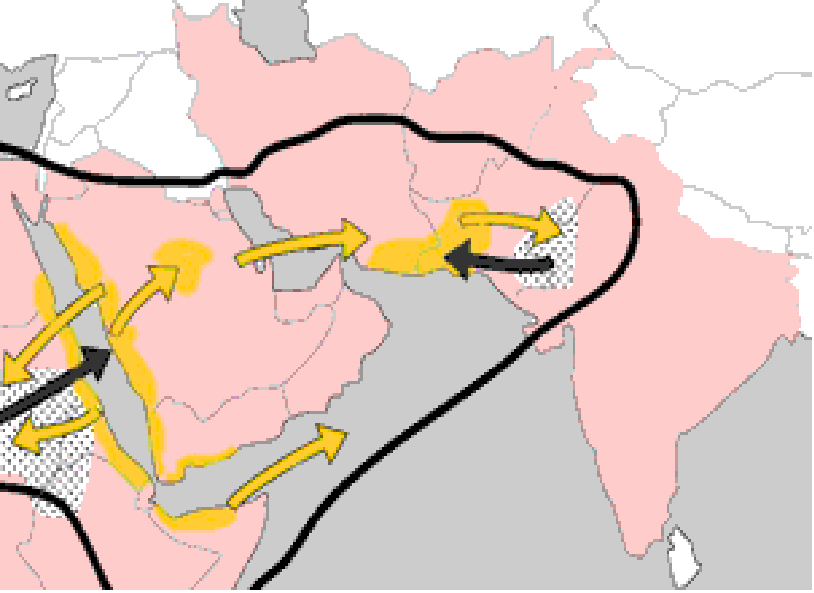
As was explained in the article, excitable Locusts are migratory in nature, which means they can travel relatively long distances in search of food. This means, these insects, migrate from one country to another. In this case, swarms of desert locusts have begun their journey in the Arabian country, have hit Iran, and eventually end their migration in India and Pakistan if remain unchallenged.
Since this is a phenomenon that affects multiple countries, there is a joined effort to prevent this problem. For instance, in this case, India has already provided Iran with 20,000 litres of pesticide (an effective Crop spraying poison) to stop this problem in track. On the international scale, these kinds of behaviour are called reciprocity, and it is highly common between nations.