
iranian agricultural news agency
The Leader of the Islamic Revolution after planting two fruit seedlings on the day of tree planting:
Expensive and people's livelihood problems have a solution; we have mentioned this to the officials in several meetings
On the occasion of Arbor Day and Natural Resources Week, the Supreme Leader of the Islamic Revolution planted two fruit seedlings before noon today (Friday).
Mr. Khamenei then called plants and green space an important factor in the life and construction of human civilization and referring to the epistemological and religious roots of attention to the environment, said: Planting a tree and planting seedlings is one of the virtues in the holy sharia Islam emphasizes it.
The Leader of the Islamic Revolution also pointed out the importance of the environment in the constitution: Environmental activities are religious and revolutionary activities and should not be viewed as luxurious and decorative.
He called the biodiversity and climate of the country a suitable platform for the activation of people and youth in the field of environment and lamented the destruction of forests, natural resources and aquifers by profiteers, emphasizing: "Environmental destruction is a great disaster that wastes the future of humman, so the authorities and all the people must stand against it.
Referring to incidents such as forest fires or the drying up of lakes and wetlands, Ayatollah Khamenei said: "These incidents are preventable and officials who do not perform their duties are to blame."
In another part of his speech, the Supreme Leader of the Islamic Revolution addressed the issue of Corona on the eve of the New Year and said: Everyone should follow the recommendations.
He stressed: "Whatever the National Coronavirus Headquarters announced must be done." If travel is banned, people will not travel, and I will definitely not travel like last year.
Ayatollah Khamenei, referring to the people's livelihood problems due to the coronavirus, said: "If the corona continues, the livelihood problems will increase, so this disease must be eliminated as soon as possible with the cooperation of everyone."
The Leader of the Islamic Revolution, expressing dissatisfaction with the costs and problems of living, added: "This situation has created great sorrow on the eve of Eid." Of course, goods like fruits are abundant, but the prices are so high and the profit of this high price does not go to the pockets of the hard-working gardeners, but goes to the profiteers and middlemen, and it harms the people.
Emphasizing that the officials should solve the problem of livelihood and high prices, he said: "These problems have all the solutions, and we have repeatedly mentioned these points in several meetings and told the officials the solutions that the experts want."
Reporter: Siavash Ansari

Click and Join Us In Social Medias:



iranian agricultural news agency
Covid 19 did not disrupt our country's food security
Kaj Press:
Agriculture of Iran: 19/02/2021
The President thanked all the farmers of the country, especially the exemplary farmers, and emphasized that the farmers provide self-sufficiency, independence of the country and food security of the people with their work and efforts around the clock, and we all appreciate their efforts.
He said: "One of the honors of this government is to do great work in various fields in the field of agriculture."
The President praised the inauguration of 954 hectares of greenhouses in one day, which is equivalent to one-eighth of the country's total greenhouses from the beginning until now, and appreciated the efforts of the Ministry of Jihad Agriculture in the government of prudence and hope.
Rouhani pointed out that if we were in need of food and agricultural materials and products abroad, there would be fundamental problems in the sensitive situation of the country, referring to the conditions of the corona virus outbreak around the world: no one would have imagined that one day due to the corona virus, all the borders of the countries will be closed for 2 months, and if we needed to go abroad to supply wheat and food, the situation in the country was unfavorable.
Referring to the importance of water and food for the health of the people, the President continued: "In the context of economic war and the pressure of sanctions, the importance of food security becomes more apparent."
Rouhani described the provision of suitable seeds to farmers in the government as a great honor for the country and continued: "Today, 2 to 10 tons of crop is harvested from one hectare of land, And if agricultural equipment was not available to farmers, harvesting in a timely, fast and with this amount would not be possible.”
In another part of his speech, the President referred to the opening of 42 virtual training channels for farmers and stated: The opening of these training channels and answering the questions of farmers is very important.
Reporter: Siavash Ansari
Join us in social media:

The secret of date and its place in Iran's agricultural economy
According to the report of Kaj Press, Iran annually produces between 1.1 million tons to 1.2 million tons of date in 203,763 hectares, which makes Iran the second largest producer of date in terms of production and area under cultivation. Be the fifth largest exporter of this product in the world.
Estimated date production in the world is about 7.5 million tons, which is cultivated in one million and 100 thousand hectares of groves with an average yield of 6 thousand 834 kg.
Egypt, Iran, Saudi Arabia, UAE, Pakistan, Algeria, Iraq, Sudan, Oman and Libya are the top 10 date producers in the world, with Egypt having the highest yields and Algeria having the highest area under cultivation.
The average global per capita consumption of date is more than one kilogram and this figure is estimated at seven to 10 kilograms in Iran.
Date production is limited to 6 provinces of Kerman, Sistan and Baluchestan, Khuzestan, Hormozgan, Bushehr and Fars, and South Khorasan has been added to the country's date-producing provinces with little production.
The highest volume of date production is related to Kerman, Sistan and Baluchestan and Khuzestan provinces, and about 70% of the production with a volume of nearly 800 thousand tons of date is related to the three provinces.
According to the report, there are more than 3,000 types of date around the world that vary in size, color, texture, antioxidant activity, phenolic content and so on.
Date, this fruit is rich in tropical and subtropical regions and has different types. Date are effective in relieving constipation, intestinal disorders, heart problems, anemia, sexual dysfunction, diarrhea, gastrointestinal cancer and many other physical problems, and are also rich in a variety of vitamins, minerals, and fiber. This delicious fruit contains oil, calcium, sulfur, iron, potassium, phosphorus, manganese, copper, and magnesium, all of which are beneficial for maintaining good health.
According to some health experts, consuming one date a day is essential for a balanced and healthy diet. Date contain vitamins A, B. and E.
Another feature of date is the neutralization of excess stomach acid, and since too much stomach acid makes it sour and heartburn, so whenever you have heartburn you can use the Chinese formula in traditional Chinese medicine. Put two to three fresh and crushed date in boiling water, then stir and drink. You can also eat date as a fruit.
Also, be sure to eat your dinner at around 7 pm for a more comfortable and relaxing sleep, and drink a date and a glass of warm milk before going to bed.
Date is very useful for the elderly and children. Try using date for tea instead of sugar or use it more in the kitchen. Athletes, due to their high activity, must use nutritious supplements that are accompanied by date.
In the following, we will get more acquainted with some of the most well-known types of date in the world and in Iran: (Click Here)
 Faranak-Masoudi (agricultural reporter)

The second phase of the plan to rehabilitate 550,000 hectares of land in Khuzestan and Ilam provinces began with the presence of the first vice president
According to *Kaj, and quoting Paj, the second phase of the plan to rehabilitate 550,000 hectares of land in the provinces of Khuzestan and Ilam began with the presence of the first vice president.
Dr. Jahangiri said at the ceremony: "With the completion of phase one of the project, three and a half million tons have been added to the country's agricultural production, and with the operation of this project, the income of farmers in the region has been increased."
He also expressed hope that with the implementation of the second phase of the project at the level of 255,000 hectares, the people of the region will enjoy the blessings of water and agricultural reforms.
The first vice president also said in the meeting of the resistance economy headquarters of Khuzestan province: with the completion of the first phase of the 295,000-hectare agricultural land reclamation project in Khuzestan and Ilam provinces, the province's agricultural production will increase from 1.7 million tons to 5.2 million tons has arrived.
He emphasized that the people of Khuzestan are satisfied with the implementation of the 550,000-hectare project.
It is worth mentioning that the implementation of the second phase of the project started on Saturday, January 28th.
*Kaj = Pine (Our News Agency)
Reporter: Mohadese Beygzadeh
:JOIN US

Iran ranks seventh in chicken production in the world!
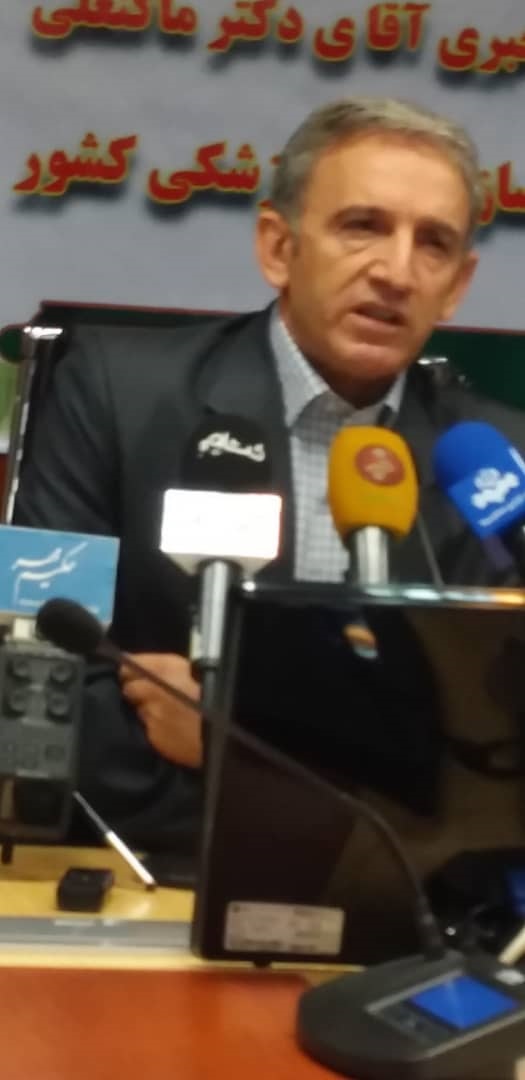
What you are reading below are the important topics of Dr. Maknali's speech as the head of the country's veterinary organization, which was presented today, June 22, 2020, on the occasion of Agricultural Jihad Week. Read:
Imports of livestock and poultry feed are declining by 20 percent
Ali Safar Makanali, head of the country's veterinary organization, told a news conference on the occasion of Agricultural Jihad Week that a "National Strategic Committee for Production and Health" had been set up to reduce livestock and poultry feed imports by 20 percent.
He said that the implementation of this program has started in the country, adding that the focus of this program is to prevent the sale of raw food to poultry farms and turn it into a concentrate in factories.
He stressed: "Another plan is not to allow the per capita consumption of chicken to exceed the current 32 and a half kilograms, which is twice the global average, because an increase in this amount will affect other links in the chain."
Iran's seventh place in chicken production in the world
He pointed to Iran's success in chicken production and said: "Iran ranks seventh in the world with 2.7 million tons of this product, and the per capita consumption of this product in the country is 32 kg, which is twice the global average."
The head of the country's veterinary organization also pointed to Iran's ninth place in egg production and said: "One million and 40 thousand tons of this product is produced annually in the country."
He also noted a 25 percent increase in livestock populations, mainly due to good rainfall and improved forage and rangeland conditions.
Program to increase red meat by 30,000 tons in the nomadic community
In another part of his speech, the head of the country's veterinary organization referred to the plan to increase 30,000 tons of red meat in the framework of the National Strategic Committee for Production and Health and said: "In this plan, we will train 23,000 nomads to cultivate new methods Livestock, while we plan to reduce production costs, especially in the nomadic community.
25% growth in light livestock population in the country
He announced a 25 percent increase in livestock population in the country and said: "According to statistics, the population of light livestock such as sheep, goats, lambs and goats is 67 million, which despite the increase in population, we have a special program to monitor and control it."
90% of livestock vaccines are domestically produced
The head of the country's veterinary organization added: "Currently, 75% of poultry vaccines are imported, but 90% are domestic livestock vaccines." But the raw material is imported.

 rFaranak-Masoudi (agricultural reporter)