
kaj press:
Sugar beet production broke the chart!
kaj press- Masoud Ansari
It is estimated, analyzing the agricultural records in the field of sugar plants, that the production of Sugar beet will reach 805 million tons this year and the records show that this amount of Sugar beet production has never been reached within the last 128 years.
Mr. Peyman Hesadi, the project manager in the field of sugar plant production explained, that although the process of harvesting sugar beet across the country is still in progress, it is believed that the amount of produce is very well going to exceed 805 million tons which is historical production record in the field of sugar plants.
Mr..Peyman Hesadi, further explained if the environmental situation i.e. seasonal rain in Khuzestan does not interfere with the process of harvesting the sugar beet with the help of farmers and trained local people the harvesting of the sugar beet will be conducted successfully which the abovementioned record will be met
He further elaborates that although the harvesting of the produce has been thoroughly planned and in practice, it is going very well, nevertheless, there are potential obstacles such as delay in harvesting which could result in spoiling the produce, seasonal rain in Khuzestan, ice forming inside the plant tissue, electricity and power outage, excessive importation of sugar which result in negative supply and demand cycle etc.…
Mr. Peyman Hesadi, In regard to the transformation process of sugar beet into sugar which the sugary manufacturing sector is responsible for, described, that the industry has been very cooperative and attentive in this process.

There is no Avian Influenza in Iran - according to Iran’s veterinary director
Kaj Press- Masoud Ansari
According to the national veterinary of Iran, in regard to Avian Influenza (H9N2 Subtype), which
is believed to be, on a very small scale, circulating the globe, particularly in Middle East,
there has been a solid hygienic protocol which has rendered the development of this influenza
impossible and thus the trace of this disease has never recently been found in neither of Iran’s
industrial poultry sector, nor the rural areas where traditional poultry is being produced.
The organization further, in regard to this disease which transfers from animals, namely
chickens, into the human, explains, there is a sufficient amount of vaccination stored within the
the country should any outbreak arise.
Mr. Alireza Rafieipour, who holds the abovementioned governmental position added, that although
enough vaccination exists within the country and the development and mass distribution of this
vaccination is highly feasible, at even a larger, rather unprecedented scale, if this disease shall
separate, the power to request the importation of this vaccine is at hand.
Mr. Rafieipour mentioned that Avian Influenza (H9N2 Subtype) is a deadly virus which is more
likely to occur during cold temperatures, particularly during winter, in the colder part of the
country. He further explained the spread of it can be descriptive for the country and therefore
plenty of proven protocols have been implemented to prevent this disease in the thoroughly
country.
According to Kajpress news quoting Irena news sources, Avian Influenza (H9N2 Subtype) is a
global challenge which has caused many issues related to humans’ health, food supplies and
agricultural economy, nevertheless, learning from the consequences of the spread of this Influenza,
since the Iranian year of 1397 i.e. 2018, a thorough procedure has been structured to fully
eliminate the development and spread of these diseases. According to the abovementioned
agricultural news sources, the implemented protocols and practices have worked well for
the country, and they ought to be closely followed in the future.

Investment in purchase of 10 thousand “Heavy Livestock” to address the farm congestion as well as supporting the supply of internal beef consumption
KajPress- Masoud Ansari
Mr. Mohamad Ebrahim Hassan Nejad, the deputy director of livestock production within the Ministry of Agriculture (Jihad) talked about investment in the first quarter of the year in regards to buying 10 thousand “Heavy Livestock” including Cows, Sheep and Goats.
Mr. Mohamad Ebrahim Hassan Nejad, during a provincial trip which was accompanied by the Ministry of Agriculture (Jihad), visited an abattoir in the town of Bojnord. During this visit, Mr. Hassan Nejad referred to the code of conduct within the agricultural sector, particularly “Strategic Reserves” and explained as of 5/DAY/1403 i.e. 26/DEC/2024 the investment into buying “Heavy Livestock” will be launched.
He added a number of livestock holders active in the industry have been complaining about the accumulation of their stock which has resulted in congestion of their farms. He explained as a result of this, the ministry finds itself responsible and made the decision to purchase these livestock, thus the abovementioned investment.
Mr. Hassan Nejad, further elaborates, as well as addressing the issue of overcrowded farms, this investment also supports the supply of internal beef poultry consumption.
It is worth noting that the North Khorasan province is the primer within the country to contribute to such investment.

Kaj Press- Masoud Ansari
The visits of president Masoud Pezeshkian from the advanced agricultural exhibition in northern Khorasan province.
Mr. Pezeshkian, the current Iranian present, has visited the 14th advanced agricultural development exhibition in Bojnod Khorasan.
In this exhibition, which show case the specialized and current technology such as tools, machinery, horticultural, livestock and poultry in the field of the agriculture in Iran, 45 individual firms, taking over 105 booths, has been represented.
Mr. Pezeshkian, the head of the current government, visited the booths within this exhibition, and discuss the latest development of their advanced agricultural innovation.
According to the regional agricultural statistics, northern Khorasan province contained 344 thousand hectares of active farms in which approximately 85% of them are agricultural and the remaining are garden-style farms. The statistics also explains the majority of population of region are active in agricultural industry.
It is worth noting that the Khorasan province provides more than 101% of the gross produce in which 70% of these production used toward storage, preservation and innovation

Kajpress
Masoud Ansari
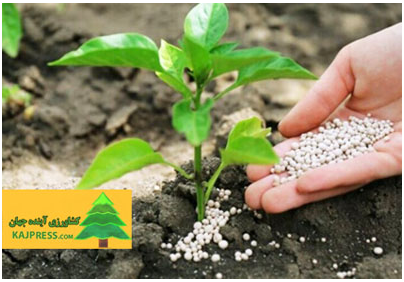
30% of the credit spent toward the general agricultural Fertilizers ought to be instead spent on biologically advanced Fertilizers.
According to a micronutrient who contributed toward the development of Iranian agriculture, quoting agricultural laws, specifically the 7th development regulation, claims, 30% of the credit awarded toward general agricultural Fertilizers ought to be instead spent on biologically modified Fertilizers.
Another micronutrient, Amir Hossain Mohamadi, who holds the position of chairmanship of the association of biological organic products in Iran, in regard to the abovementioned claim, added, advance biological agricultural supplementaries such as Amins Acid and other fertilizers such as Nitrogen and Phosphate are currently being produced in which these supplementaries and fertilizers significantly improve and increase the agricultural produce.
Mr. Mohamadi further added, referring to Ministry of Agriculture (Jihad) statistics, the 1 ton of this specific fertilizer was aimed to be produced this year, nevertheless, this target was not met in which the quality and quantity of the mass overall scale produce is compromised.
Withing the same sat down, discussing another agricultural issue, Mr.Ali Mohamad Arab, a member of the board of directors within the Poisons and Pesticides sector explained, the illness of “Rice Blast” which is rather has become common in the northern part of the country is due to the lack of availability of appropriate Pesticides. He also added, due lack of this appropriate Pesticides, once the weather becomes expectedly more humid, the plants tend to, within 48 to 72, get dried and spoiled, alternatively rendering them unusable.
Mr Ali Mohamad Arab, quoting Kajpress news itself, further explained, the above-mentioned specific Pesticide requires 40% micro-raw materials (imported externally) and 60% macro-raw materials produced internally. Requiring 40% micro-raw materials, imported externally, Mr Ali Mohamad Arab argues given the turbulent foreign currency market, how can it be expected that the production of such Pesticides will be implemented inexpensively, effectively and reliably?
ble.ir/@kajpress_ir
eitaa.com/kajpress